
Gigabyte GA-EX58-EXTREME Core i7 Motherboard
Gigabyte GA-EX58-EXTREME
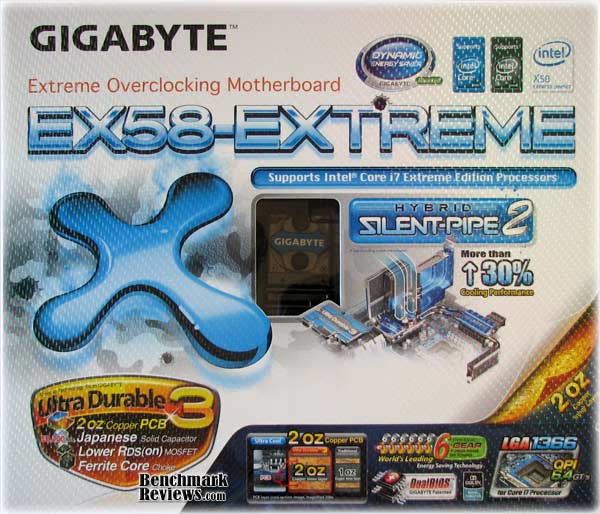
The GA-EX58-EXTREME is the latest high performance X58-Express Series motherboard from GIGABYTE, designed from the ground up to unleash the awesome power of Intel's new Core i7 processors. Equipped with a host of new features including the new QPI interface, 3-channel DDR3 support, 3-Way SLI and CrossFireX support, Ultra Durable 3 technology and the industry's most extensive range of overclocking features, the EX58-EXTREME is bringing excitement back into the high performance motherboard industry. In this article, Benchmark Reviews compares the EX58-EXTREME to Intel's DX58SO Smackover and last-generations X48T-DQ6 motherboards.
The EX58-EXTREME was designed specifically to take advantage of the raw power of the next generation Intel Core i7 processors and the Intel X58 Express chipset, whose new evolution in computing architecture is able to deliver an amazing performance break through from past processor generations. Replacing the Front Side Bus is the new Quick Path Interconnect, or QPI, whose 25.6 GB/sec transfer rate (double the bandwidth of the 1600MHz FSB) eliminates the communication bottleneck between the processor and chipset.
Intel's Core i7 processors also feature an integrated memory controller inside the processor die and support 192-bit 3-channel DDR3 memory that delivers a 50% memory bandwidth enhancement and lower memory latency for incredibly fast memory access. Additionally, The EX58-EXTREME features Intel Turbo Boost Technology, which is able to power down idle processor cores and dynamically reroute the power to the active cores for significant performance boosts, and at the same time, maintain greater energy efficiency.
The Intel X58 Express Chipset continues to push innovation with capabilities designed to deliver quality, performance and headroom The Intel X58 Express Chipset achieves this performance by supporting the latest Intel Core i7 family of processors at 6.4 GT/s and 4.8 GT/s speeds via the Quick Path Interconnect (QPI), and enabling increased system bandwidth by supporting industry leading technologies, such as PCI Express 2.0 graphics, Intel Turbo Memory and support for Intel High-Performance Solid State drives.
About the company: Gigabyte United Inc. (G.B.T. Inc. USA)
Gigabyte United Inc., established in December 2006, is assuming the GIGABYTE TECHNOLOGY Co., Ltd. Brand, which for the past 20 years has been a world-renowned leader in the motherboard industry. Continuing to focus on its core businesses of GIGABYTE branded motherboards and graphics cards, Gigabyte United Inc. is committed to providing our valued customers with the highest quality products and services featuring the industry's most innovative design.
In order to meet the challenges of today's intensely competitive channel market, Gigabyte United Inc. fully utilizes its key assets including its cutting-edge research and development team as well as its professional sales and marketing resources to continue to develop technologies to fit a complete range of digital life solutions. Now and for the future, Gigabyte United Inc. will continue to embody the unique spirit and culture, which has made Gigabyte one of the foremost brands in the industry.
More information about Gigabyte is available by visiting their website.
Intel Core i7: Platform
What is Nehalem Technology?
The Intel Core i7 microprocessor is built using a new micro architecture, codenamed "Nehalem," that allows chips to handle more data, quicker and more energy efficiently. Go inside Intel's labs and meet some of the thousands of Intel engineers who helped design and test the new processor. "Building this microprocessor brings a lot of people together, like architects, micro architects and the design teams," says Rani Borkar, vice president of Intel's Digital Enterprise Group. "As you get into the development phases, working with the process technology, it's a mind-boggling effort that requires a lot of teamwork across the board."
Before going into the specifications and features of the entire Intel Core i7 processor series we thought some background information about the new Nehalem technology might be in order. While doing research for this review I came a cross a very useful document on Intel's website entitled: "First the Tick, Now the Tock: Next Generation Intel Micro-architecture (Nehalem)". This white paper article helped me to gain a much better understanding of not only the features we'll see today in the Core i7 series of processors, but in future product releases we're likely to see that will implement other aspects of the Nehalem architecture. The article itself is 8 pages long so I'll leave it to you to read it in its entirety, but I will share a few excerpts that may help you to gain a better understanding of the products we'll visit today.

The first chapter is all about scalability. Next generation Intel micro architecture (Nehalem) is a dynamically scalable and design-scalable micro architecture. At runtime, it dynamically manages cores, threads, cache, interfaces, and power to deliver outstanding energy efficiency and performance on demand. At design time, it scales, enabling Intel to easily provide versions that are optimized for each server, desktop, and notebook market. Intel will deliver versions differing in the number of cores, caches, interconnect capability, and memory controller capability, as well as in the segmented use of an integrated graphics controller. This allows Intel to deliver a wide range of price, performance, and energy efficiency targets for servers, workstations, desktops, and laptops.
To extract greater performance from this new micro architecture, in targeted market segments, Intel is also introducing a new platform architecture: Intel QuickPath Architecture. Through integrated memory controllers and a high-speed interconnect for connecting processors and other components, Intel QuickPath Architecture delivers best-in-class performance, bandwidth, and reliability. In turn, it truly enables systems to fully unleash the new levels of performance that new and more powerful next generation micro architecture-based processor cores will deliver.
Next generation Intel micro architecture (Nehalem) marks the next step (a "tock") in Intel's rapid "tick-tock" cadence for delivering a new process technology (tick) or an entirely new micro architecture (tock) every year. The first Nehalem-based processors are expected to release in the latter part of 2008. The family will grow to include server, workstation, desktop, and mobile processors.
The next generation micro architecture's performance and power management innovations include:
-
Dynamically managed cores, threads, cache, interfaces, and power.
-
Simultaneous multi-threading (SMT) for enabling a more energy efficient means of increasing performance for multi-threaded workloads. The next generation micro architecture's SMT capability enables running two simultaneous threads per core-an amazing eight simultaneous threads per quad-core processor and 16 simultaneous threads for dual-processor quad-core designs.
-
Innovative extensions to the Intel Streaming SIMD Extensions 4 (SSE4) that center on enhancing XML, string, and text processing performance.
-
Superior multi-level cache, including an inclusive shared L3 cache.
-
New high-end system architecture that delivers from two to three times more peak bandwidth and up to four times more realized bandwidth (depending on configuration) as compared to today's Intel Xeon processors.
-
Performance-enhanced dynamic power management.
For more information on Intel's Core i7 series, please visit our Featured Reviews: Processors section which includes comprehensive articles on the Core i7-920 (BX80601920) and Core i7-965 Extreme Edition processors.
Intel X58-Express Platform
The Gigabyte GA-EX58-EXTREME motherboard platform consists of the Intel Core i7 processor (CPU), Intel X58 Express Chipset (IOH) and the ICH. The CPU now incorporates the system memory controller and accesses DDR3 memory through three independent memory channels. The IOH provides support for the two PCIe graphics slots and connects to the CPU via the Quick Path Interconnect (QPI) bus. The ICH provides the support for the SATA, USB and other system interfaces and is connected to the IOH via the DMI bus.
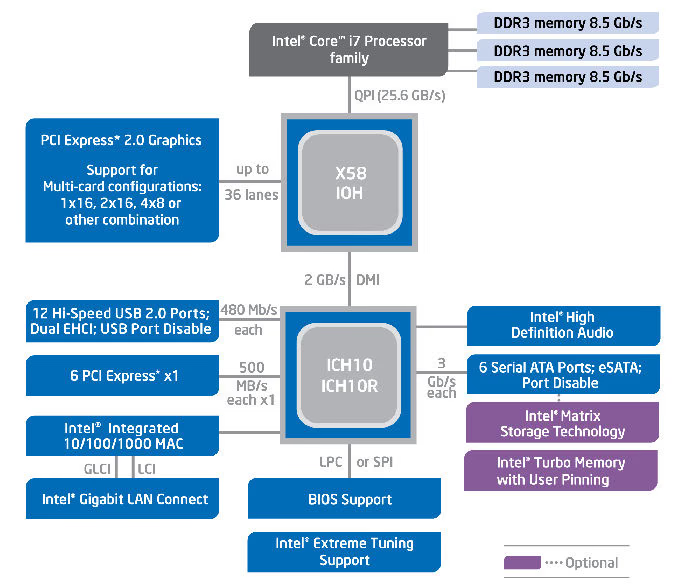
All motherboard busses and components are driven from a single 133.33 MHz base clock. The resulting component speed values are generated by applying a multiplier value to this base clock. There are four multipliers on the motherboard which are used to set the system speed:
-
CPU Speed: When multiplied by the system base clock speed (default 133.33 MHz) gives the CPU frequency. Four multipliers are used to define different speeds based on the number of active CPU cores.
-
Memory Speed: When multiplied by the system base clock speed gives the memory frequency. For example a memory multiplier of 10 times the base clock of 133.33 MHz results in a memory frequency of 1333 MHz.
-
Quick Path Interconnect (QPI) Speed: Selectable transfer rate of data transferred between the CPU and the IOH.
-
Uncore Speed: This multiplier applies to the non-CPU related items in the processor. The limit on this multiplier is set by the memory multiplier.
The Intel X58 Express Chipset
The Intel X58 Express Chipset continues to push innovation with capabilities designed to deliver quality, performance and headroom The Intel X58 Express Chipset achieves this performance by supporting the latest Intel Core i7 family of processors at 6.4 GT/s and 4.8 GT/s speeds via the Quick Path Interconnect (QPI), and enabling increased system bandwidth by supporting industry leading technologies, such as PCI Express 2.0 graphics, Intel Turbo Memory and support for Intel High-Performance Solid State drives.
PCI Express 2.0
Intel's high-end desktop chipset continues support for PCI Express 2.0 and adds flexibility with support of dual x16 and up to quad x8 graphics card configurations and combinations in between. The greatly improved 32GB/s of graphics bandwidth capability enables much higher levels of performance on graphics intensive applications such as high end gaming and video rendering for digital content creation.
Faster System Performance
With the growing imbalance between processor and memory performance, it is critical to optimize the memory controller design to obtain the maximum possible performance from the memory subsystem. The transition of the integrated memory controller (iMC) into the processor significantly increases overall system performance through the optimization of available bandwidth along with reduction of memory access latency. The Intel Core i7 family of processors brings triple channel DDR3 memory technology support. The DDR3 SDRAM devices operating at 1066 MHz, offer peak data transfer rates of up to 25.6 GB/s (when operated in triplel-channel interleaved mode), enabling the platform to take advantage of the higher bandwidth, faster system performance, and higher performance per watt at 1066MHz2.
Intel I/O Controller Hub 10 (Intel ICH10 and Intel ICH10R)
The Intel ICH10 I/O controller hub of the Intel X58 Express Chipset integrates several capabilities to provide flexibility for connecting I/O devices.
-
Intel Matrix Storage Technology1: Native support of external SATA ports (eSATA), combined with Intel Matrix Storage Technology (Intel MST), provides the flexibility to add an external drive for increased data storage with up to 6 times faster performance than USB* 2.0 or IEEE 1394 4002. Support for eSATA enables the full SATA interface speed of up to 3 Gb/s outside the chassis. The Advanced Host Controller Interface (AHCI) provides easier expandability with support for eSATA devices and native hot plug, while boosting boot and multi-tasking performance with Native Command Queuing (NCQ). In addition, support for Command Based Port Multipliers, and RAID levels 0, 1, 5 and 10 enable greater reliability for personal data, or maximum storage performance for intensive applications.
-
Intel Rapid Recover Technology (when configured with ICH10R I/O controller): With the ability to instantly boot off of a clone hard drive, Intel Rapid Recover Technology provides a fast, easy to use method for the end user to recover their data and return their system to an operational status.
-
Intel Turbo Memory: The Intel X58 Express Chipset with the Intel ICH10R also supports Intel Turbo Memory, an innovative flash memory-based overall system performance and boot time accelerator. This feature is easily implemented using a PCI
Express x1 module and can be used with any SATA Hard Drive to improve system responsiveness. Intel Turbo memory enables faster application loading and concurrent performance enhancements when used in conjunction with Intel Matrix Storage
Technology. Intel Turbo Memory, paired with the Intel X58 Express Chipset, also allows the user to easily control the applications or data in the cache using the new Intel Turbo Memory Dashboard interface, boosting performance further. -
Intel Solid State Drives support: The Intel X58 Express Chipset, when paired with Intel X25-E Extreme and X25-M Mainstream SATA Solid State Drives (SSDs), provides a high performance solution that can enable faster overall system response, boot and resume times. With no moving parts, SSDs run cooler and quieter and are a more reliable option than hard drives. In addition, SSDs remove input/output (I/O) performance bottlenecks associated with hard disk drives that help maximize the efficiency of Intel processors, such as the new Intel Core i7 processor family.
Gigabyte X58 Features
Breaking overclock records is what the GIGABYTE EXTREME motherboard is all about, with friendly overclocking features such as Precision OV (Hardware Overvoltage Control IC), Debug LED and onboard clear CMOS switches. Additionally, the GIGABYTE GA-EX58-EXTREME motherboard features comprehensive BIOS options for reaching higher limits with more detailed settings, including CPU frequency stepping, Over Voltage increments, memory multipliers and advanced memory timing controls, making it easier than ever to tweak the highest levels of extreme overclocking performance from your system.
The GIGABYTE GA-EX58-EXTREME motherboard now features the revolutionary new GIGABYTE Hybrid Silent-Pipe 2, a fusion thermal solution that combines GIGABYTE's proprietary screen cooling technology, external heat sink and liquid cooling with chipset water block to deliver maximum thermal performance. Add in the highest quality sound performance with the Dolby Home Theater technology suite, and the GIGABYTE GA-EX58-EXTREME motherboard makes for one ultimate extreme system. Whether overclocking or gaming, you can be sure your system was built for the extremes.
Hybrid Silent-Pipe 2
Hybrid Silent-Pipe is a fusion thermal solution that combines liquid cooling, screen cooling and external heat sink to deliver unequalled heat conductivity. Hybrid SILENT-PIPE 2 is able to provide 30% cooler thermal performance (Under Liquid cooling environment).
• Unique Screen Cooling thermal design effectively reduces the temperature around the CPU zone and removes the heat between NB and SB area.
• Liquid Cooling system featuring special waterblock design with an enlarged dissipating surface area for enhanced heat dissipation and optimum flow-rate.
• High-Precision die forming technology utilized to increase the thermal conductivity of the material that makes up the heat sink.
• High performance Copper Heat Pipe with sintered process designed for ultra efficient thermal conductivity.
• External Heat Sink design utilizing a convection slot at the back of the chassis to increase thermal dissipation.
Ultra Durable 3
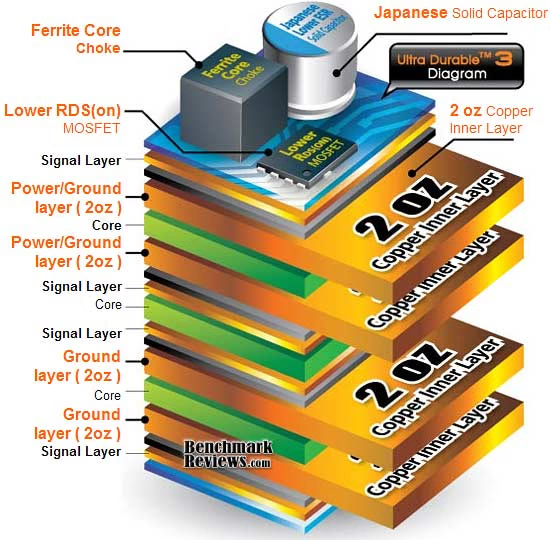
Revolutionary Ultra Durable 3 technology from GIGABYTE features the industry's first consumer desktop motherboard design with 2 oz copper Power and Ground layers for dramatically lower system temperature, improved energy efficiency and enhanced stability for overclocking.
2 Gigabit LAN - High Velocity 2X Bandwidth Boost
Teaming functionality enabled allows 2 single connections to act as 1 single connection for twice the bandwidth, improving overall throughput.
DualBIOS - Patented Dual Hardware BIOS Protection
Automatically recovers Main BIOS data when Main BIOS has crashed or failed.
Integrated Memory Controller - Intel Core i7 Processors feature triple channel DDR3 support
Intel Core i7 processors feature the memory controller integrated directly into the processor die rather than as part of the Northbridge as in previous generations, allowing for faster memory performance. Core i7 processors also provide additional memory support including:
• 3 channels, 6 DIMMs
• Up to 2 DIMMs per channel
• Supports single, dual and quad-bank DIMMs
QPI (QuickPath Interconnect) - Replacing the role of FSB
Intel uses the QPI to connect internal components of Core i7 processors , and to connect the CPU itself to the Northbridge and banks of memory. QPI delivers up to 25.6GB/sec of bandwidth between Core i7 processors and the rest of the system, providing exactly double the bandwidth of 1600 MHz FSB.
Intel Turbo Boost Technology - Dynamically reroutes power to improve performance
For situations when all cores are not needed for a particular workload, Intel Turbo Boost Technology powers down the idle cores and dynamically reroutes the power to the active cores, boosting their performance without wasting power. This allows the active cores to achieve significant overclocks.
Precision OV - Hardware Over Voltage Control ICs
provide more voltage control options than before (CPU, NB & Memory). HW linear real time voltage control provides finer voltage control steppings as little as 20 mV min (.002 V) with no delay compared to previous GPIO.
Dynamic Energy Saver
Gigabyte first launched their full range of Dynamic Energy Saver motherboards beginning with the P35-based series, and later included the X38 and X48 motherboards. Dynamic Energy Saver, or DES, allows you to receive unparalleled power savings of up to 70% and up to 20% improved power efficiency with the simple click of a button. Back as a new "Advanced" edition, the GA-EP45T-EXTREME allows even greater control and power savings.
"With more than one year of intensive design and testing, Gigabyte's Dynamic Energy Saver represents a truly amazing revolution in motherboard development," said Johnson Lin, CEO of Gigabyte United. "With one little click, users are able to take advantage of up to 70% CPU power savings without sacrificing computing performance. Imagine the potential for power savings on a global scale if every motherboard in the world was able to provide similar power savings."
Featuring an advanced proprietary software and hardware design, including high quality components from Intersil, Gigabyte Dynamic Energy Saver is a unique technology that provides exceptional power savings and improved power efficiency. The unique multi-gear power phase design of Gigabyte's Dynamic Energy Saver allows for the most efficient switching of power phases depending on CPU workload. When the CPU workload is light or at idle, the Dynamic Energy Saver downshifts gears and only allows the minimum required power phases needed to accomplish the task to operate. By turning off the power phases that are not needed, Gigabyte's Dynamic Energy Saver is able to dramatically save power, up to 70% compared to traditional motherboards, that would normally have been wasted. As soon as the workload increases, Dynamic Energy Saver recognizes that more power is needed and is able to shift into higher gear, turning on power phases as they are needed.

Unlike traditional power designs that keep all power phases active at all times no matter what the loading, Gigabyte's Dynamic Energy Saver features multiple gears, allowing the CPU to maintain optimum power efficiency from light all the way to heavy loading. In a traditional power phase design, each gear needs to operate at less than optimum efficiency, causing gaps in power efficiency. With the ability to switch on and off gears before they start to loose efficiency, Gigabyte's Dynamic Energy Saver is able to provide up to 20% improved power efficiency.
Dynamic Energy Saver User Interface Gigabyte's user-friendly Dynamic Energy Saver interface allows users to turn on and off the power saving features with a simple click of the Dynamic Energy Saver button. Not only can users see real-time CPU power consumption in Watts, but once Dynamic Energy Saver is enabled, users can also see how much power they are actually saving. In Meter Mode, Gigabyte Dynamic Energy Saver shows how much power users have saved in a set period of time. Like a trip odometer in a car, users are able to reset the power savings meter to zero. In Total Mode, users are able to see how much total power savings they have accumulated since activating Dynamic Energy Saver for the first time. Even if the Dynamic Energy Saver functionality is turned off, the total amount of power saved will be recorded until re-activated, when total power savings will resume recording power savings.
Gigabyte's Dynamic Energy Saver technology also delivers additional power savings with its Dynamic CPU Voltage Control. Adjust the CPU voltage according to power saving needs; Level 1 for Normal Power Savings, Level 2 for Advanced Power Savings, and Level 3 for Extreme Power Savings. Gigabyte's Dynamic Frequency Control (CPU Throttling) allows for additional system power savings with a simple 1-click on/off button.
Unique Dynamic Energy Saver Hardware Design
Gigabyte Dynamic Energy Saver enabled motherboards feature an LED display located directly on the motherboard, allowing users to see the dynamic gear shifting in real-time. As each gear is activated, a color-coded LED representing the gear lights up.
Gigabyte Dynamic Energy Saver + Intel 45nm CPU = Unmatched Energy Efficiency
Gigabyte Dynamic Energy Saver motherboards paired with Intel 45nm CPUs deliver the very best platform for multitasking, multimedia and high performance gaming, all while consuming very little power. By combining the improved performance-per-watt and optimized power savings of the Intel 45nm CPUs with the Ultra Durable, Ultra Cool and Ultra Energy Efficient performance of Gigabyte's Dynamic Energy Saver motherboards, users will be able to experience a new world of energy efficient computing.
Benefits of Gigabyte Dynamic Energy Saver
Not only does Gigabyte Dynamic Energy Saver help users save money on electricity costs, but Dynamic Energy Saver enabled motherboards also help to reduce the impact everyday computing has on the environment. Less power consumption means less energy is needed to be produced from coal burning power plants. This cuts down on carbon dioxide output, a byproduct of burning fossil fuels for electricity and a known component of greenhouse gasses.
Today it is more important than ever to help conserve and protect our environment. That is why Gigabyte has taken the lead to develop responsible computing technologies that have as little impact on the environment as possible. In addition to Dynamic Energy Saver, Gigabyte has removed lead and other hazardous materials from their products, helping to create a greener computing future.
Gigabyte offers a video demonstration of their Dynamic Energy Saver feature in action. You can download or view the demonstration here.
EX58-EXTREME Specifications
The GA-EX58-EXTREME was designed from the ground up to unleash the awesome power of the new Intel Core i7 processors. With a significant communication bandwidth increase of 1600MHz between the processor and chipset, 50% memory bandwidth enhancement and featuring extensive overclocking capabilities, the GIGABYTE EXTREME overclocking motherboard delivers the highest level of performance computing you've been waiting for.
Just when you thought 2 PCI-E x16 was good enough, GIGABTYE delivers 3. The GIGABYTE GA-EX58-EXTREME motherboard features 3 PCIe x16 Gen2.0 slots with support for both 3 way ATI CrossFireX and 3 way NVIDIA SLI, enabling powerful graphics configurations for extreme multi-GPU gaming.
| CPU |
|
|---|---|
| QPI |
|
| Chipset |
|
| Memory |
|
| Audio |
|
| LAN |
|
| Expansion Slots |
|
| Storage Interface | South Bridge:
|
| IEEE 1394 |
|
| USB |
|
| Internal I/O Connectors |
|
| Back Panel Connectors |
|
| I/O Controller |
|
| H/W Monitoring |
|
| BIOS |
|
| Unique Features |
|
| Bundle Software |
|
| Operating System |
|
| Form Factor |
|
First Look: Gigabyte X58
At first glance, the GA-EX58-EXTREME appears to share many of the same ingredients Gigabyte used in their GA-EP45T-EXTREME P45-Express motherboard, with a dash of spice from their GA-X48T-DQ6 X48 mainboard. Not surprisingly, motherboards in general have followed the same trends for several years now. In fact, you might be hard-pressed to decide the difference if you viewed the bunch from a small distance.
Design traditions not withstanding the EX58-EXTREME offers all of the features you would expect from an X58-Express enthusiast motherboard, such as Intel Core-i7 support and tri-channel DDR3, but also CrossFireX and SLI graphics-teaming support.
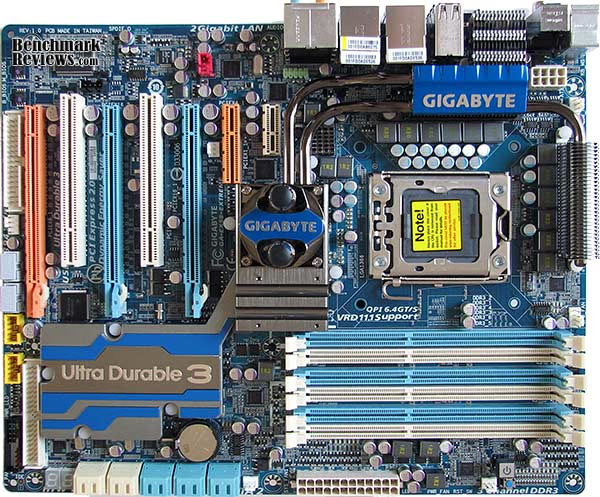
From the top view, the Gigabyte GA-EX58-EXTREME reveals a blue-themed layout. Unlike past Gigabyte motherboards (such as the GA-X48T-DQ6 I previously mentioned), there are far less colors in this X58 iteration. The biggest difference is how the colors used on the EX58-EXTREME actually represent something, instead of creating a loosely associated collage.
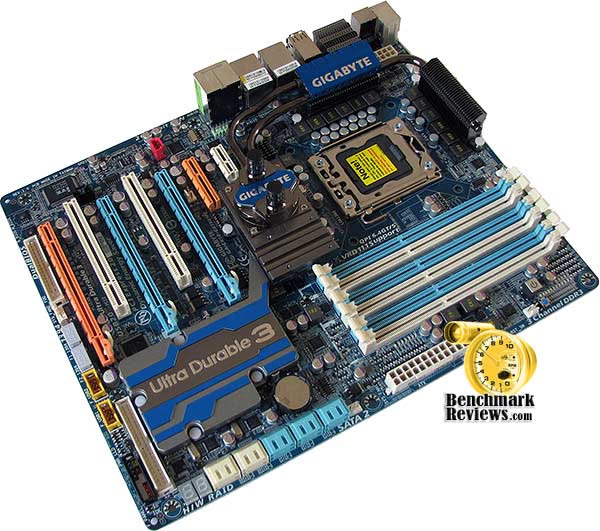
Gigabyte is working to promote their Ultra Durable 3 feature, which introduces the industry's first consumer desktop motherboard design with 2 ounces of copper used on the Power and Ground layers of the printed circuit board (PCB) to lower system temperature and improve energy efficiency. The flat 2-D appearance of the Intel ICH10R Southbridge hides any visible heat-pipes used to cool the chipset, which appears bulky a little out of place before leading into the X58 Northbridge and the heart and core of the Hybrid Silent-Pipe 2 feature.

The new LGA1366 socket increases the distance between CPU cooler mounting holes to 80mm, which is significantly more footprint area than the 72mm used by the LGA775 socket. Some CPU cooler manufacturers have designed adapters for their LGA775 coolers to fit on the new LGA1366 socket, which isn't a very safe practice. For systems not receiving an overclock, this may not be such a problem, but if you're going to re-use your Core 2 cooler on a Core i7 processor, it had better be listed near the top of our Best CPU Cooler Performance list. I'll explain why in my final thoughts section, which should be helpful information for enthusiasts.

The backside of the PCB lacks the "Crazy Cool" heatspreader plates we've seen in past generations of Gigabyte motherboards, which some enthusiasts may not miss so much. The socket LGA1366 interface receives a backplate for reinforcing the structural rigidity of the GA-EX58-EXTREME and improves contact pressure for the CPU cooler.
After a short 'first glance' at the basic layout for the GA-EX58-EXTREME motherboard, it appears that Gigabyte has designed this to be a non-nonsense mainboard solution for overclockers and enthusiasts. We will dig deeper in the following sections to find out if this Core-i7 X58-Express DDR3 motherboard offers the features overclockers and hardware tweakers will want out of and "EXTREME" labeled product.
Closer Look: Gigabyte X58
Motherboards haven't seen a lot of change in the past two years, and the GA-EX58-EXTREME looks extremely similar to past Gigabyte products. The biggest difference with this X58-Express product is that it updates the socket from LGA775 to LGA1366 in order to support the Intel Core-i7 series of processors. Additionally, the Dual-Channel DDR support that reigned supreme since the Pentium 4 days has also been updated to include Triple-Channel DDR3.
Intel may have introduced DDR3 support on their mainboards almost two years ago, but high costs paired with low adoption by manufacturers led to a reprieve for DDR2. That all ends now, as X58 is built for DDR3 only and Intel has no plans to allow DDR2 back into the game. This might seem like a move which slams the door in the face of mainstream enthusiasts wanting more value from their hardware, but the truth is that P45 and X48 chipsets will continue in production for many more months to come.
Moving to triple-channel DDR3 also adds momentum for 64-bit computing, but also optimizes current 32-bit systems. Windows XP for example, offers a 4GB maximum memory mapping space on the 32-bit variety of the O/S. Since most all PCI-E video cards available today offer at least 512MB of GDDR, it's theoritically impossible for someone to completely realize 4GB of system memory. In fact, only 2GB was available from our 4GB memory kit when we recently tested the Palit Revolution 700 Radeon HD 4870 X2 video card which has 2GB of video frame buffer of its own.
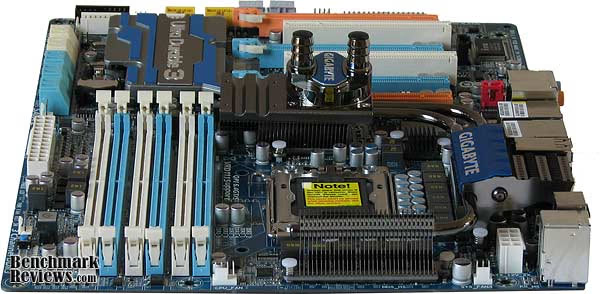
So when you start to replace 2GB (dual-channel) kits with 3GB (triple-channel) kits, there's more available memory and less waste than if the builder used a 4GB memory kit on their 32-bit O/S, and 3GB is going to be more affordable. Alternatively, the X58 chipset does not retire dual-channel memory mode, so enthusiasts who are already using their favorite DDR3 in one system can upgrade to the GA-EX58-EXTREME without purchasing additional memory; the drawback is that dual-channel mode only doubles memory bandwidth while triple-channel mode will (you guessed it) triple the original bandwidth. With support for single, dual and quad-bank DIMMs the EX58-EXTREME can utilize up to 24GB of DDR3 and keep any 64-bit O/S moving along nicely.
Some of the other features don't appear as outwardly obvious on the GA-EX58-EXTREME, such as Green LAN and Dynamic Energy Saver (DES) Advanced. I originally configured the BIOS to enable Gigabyte's Green LAN feature, which is disabled by default, but I came to learn the hard way that if nothing is plugged in (or turned on) to the RJ-45 port it will go into a deep sleep that cannot be recovered from without a reboot.
Gigabyte includes the high-definition Realtek ALC889A audio controller with DTS Connect capability on the EX58-EXTREME. This audio chipset may be integrated, but with a featured 106 dB Signal to Noise ratio over eight channels it is anything but low-end. Digital audio outputs arrive in two varieties: optical and coaxial S/PDIF connectors. Realtek's ALC889A with DTS Connect is meant to enable high quality full-rate lossless audio, and offer support for both Blu-ray and HD DVD.
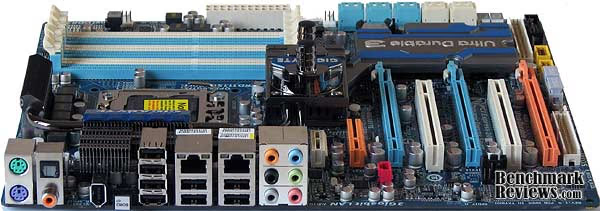
One feature that seems to have been borrowed from the ASUS Striker II NSE nForce 790i SLI Motherboard we reviewed not long ago is the "Clr CMOS" button, which allows the user to clear the custom settings of their BIOS and start over from scratch. I found this function to be very useful, but not at all in a convenient area. I recommend that Gigabyte move this button away from the USB ports which are directly beside it, so that when you're reaching around the backside of the computer case to plug in a cable you don't accidentally reset you hard-earned overclock.
A total of eight High-Speed USB 2.0 ports populate the rear I/O panel, with another four available at the mainboard header connection. One IEEE-1394a Firewire port is also available on the I/O panel, but the Texas Instruments TSB43AB23 processor allows up to two more to be added using brackets connected to the motherboards header panel. Gigabyte includes one dual-port Firewire bracket, which leaves one more port available to your computer case's I/O panel if supported.
The remainder of the input/output panel is quite busy, with a wide assortment of ports and connections for everything that is connectable by today's standard. Dual Realtek 8111D Gigabit Ethernet LAN with Teaming functionality are supplied, with activity and link speed indicators at the corner of each RJ-45 port. With teaming functionality enabled the two single connections can operate as one for twice the bandwidth, which improves the overall throughput with lower CPU utilization and adds network fault tolerance to prevent downtime by transferring the workload from a failed port to a working port.

External SATA connectors are not part of the motherboards I/O panel, however Gigabyte has included one SATA expansion bracket with the GA-EX58-EXTREME motherboard kit. There are two eSATA ports available with a 4-pin Molex power connector between them for a total of two eSATA ports. In regards to standard SATA ports, the GA-EX58-EXTREME offers six (colored blue) from the Intel ICH 10R Southbridge good for RAID-0, 1, 5, and 10 along side two more sets of SATA-II ports from a pair of JMicron JMB322 'Smart Backup' controllers (colored white) which support RAID-0, 1, and JBOD.
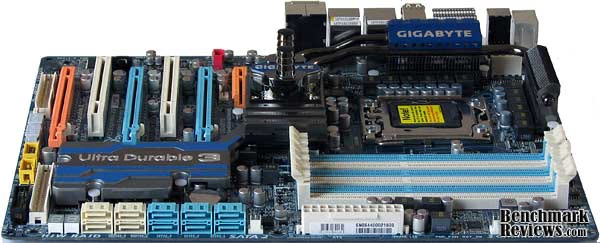
One particular note of interest is the orientation of all ten SATA ports, which utilize transverse-mount connections to stem cables off to the side of the motherboard. This layout works extemely well for all modern video cards, especially the larger GeForce GTX 280 and Radeon HD 4870 X2 video cards which occupy multiple expansion slots. This is also a corrected design from the GA-EP45T-EXTREME which rendered four of the six SATA ports unusable with larger graphics cards.
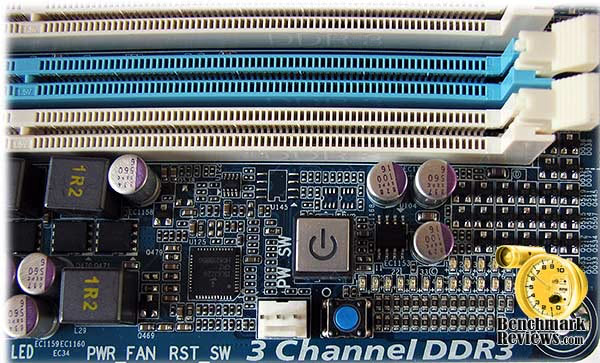
Gigabyte makes it convenient for hardware enthusiasts to tweak the motherboard without having to reach for a power button, or even have the unit installed inside a computer case. By adding a reset and power button switch directly on the motherboard, overclockers can make quick changes and simply press the closest button. Because of the trials and tribulations I had with finding a stable overclock, these two buttons (along with the Reset CMOS button) came in very handy.
One particular feature the X58 chipset introduces in the marriage of CrossFireX and SLI support on the same motherboard. Gigabyte builds three PCI-Express 2.0 ports into the EX58-EXTREME: two 16x expansion slots (colored blue) and one 8x slot (colored orange). While most gamers would stop at two-way SLI or CrossFire, the third 8x slot allows you to combine three video cards for unmatched graphics power. For the first time ever (in my experience) Gigabyte has also included the necessary 2-way and 3-way SLI bridge connectors, although the CrossFireX bridge connector remains absent from this kit.

In the next section, I get into more detail as some specific features are examined on the Gigabyte GA-EX58-EXTREME motherboard. Please continue on to learn more about the Hybrid Silent-Pipe feature and Gigabyte's Ultra Durable 3 improvements.
GA-EX58-EXTREME Details
By now you might detect a pattern I'm creating, but starting with the basics and building into a more detailed outline of the various features and functionality for the Gigabyte GA-EX58-EXTREME. Benchmark Reviews has already learned first hand how comprehensive the Intel Core-i7 X58-Express platform can be, since our ASUS P6T Deluxe review spanned 21 pages. While I don't want to skip over anything critically important, I think it might be asking too much for anyone to actually absorb that much information. So heading in our detailed look at the EX58-EXTREME, we'll stick to Gigabyte's Ultra Durable 3 and Hybrid Silent-Pipe 2 technology.
One of the key features that makes the EX58 so EXTREME is the thermal management system, dubbed Hybrid Silent-Pipe 2. Notice in the image below how the LGA1366 socket is surrounded by plated heat-pipe rods and fin-sinks; that's the groundwork for Hybrid Silent-Pipe 2. Surrounding the processor socket are several high-quality CPU power modules that utilize ferrite core chokes to minimize electromagnetic (and radio) interference signal noise and create a cleaner electrical circuit and comprise the finer points of Ultra Durable 3. A lower Resistance from Drain to Source rDS (ON) MOSFET array allows for transitional power steps, which is the heart of Gigabytes DES Advanced feature. Japanese manufactured SMD solid state capacitors, which contain a solid organic polymer and lower equivalent series resistance (ESR), are implemented throughout this board and will likely outlast the useful life of the GA-EX58-EXTREME.
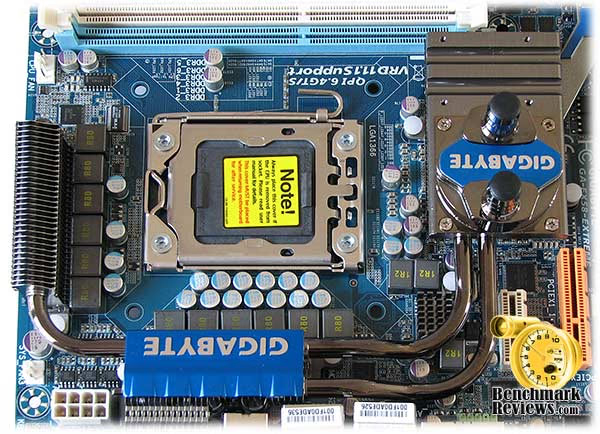
Gigabyte has doubled the amount of copper in the Power and Ground PCB layers of the GA-EX58-EXTREME up to 2 oz, which lowers the PCB impedance by 50% as a result. Impedance is a measure of how much the circuit impedes the flow of current. The less the flow of current is impeded, the less amount of energy is wasted. For Gigabyte Ultra Durable 3 enhanced motherboards, this means total PCB electrical waste is reduced by 50%, which also means less heat is generated. Two ounces of copper also provides improved signal quality, better system stability, and allows greater margins for overclocking.
The centerpiece is a hybrid liquid/air cooling unit fastened to the X58-Express chipset. In past version of Hybrid Silent-Pipe, the Northbridge played host to the front side bus functionality. With X58 the role of the Front Side Bus (FSB) has been replaced with QuickPath Interconnect (QPI), and is used to connect internal components of Core i7 processors to the Northbridge and banks of memory. With up to 25.6GB/sec of available bandwidth between the first generation Core i7 processors and the rest of the system, QPI provides exactly double the bandwidth of the previous 1600 MHz FSB.

Gigabyte includes an add-on cooling component with the EX58-EXTREME motherboard called a Hybrid Silent-Pipe module. This item features a very large fin-sink array Gigabyte refers to as a screen and integrates around two heatpipes which connect to the base. The entire Hybrid Silent-Pipe unit attaches to the X58 Northbridge base, so a combination of liquid cooling (optional) can be combined with the high-performance air-cooling functionality of copper heat-pipes for up to 30% improvement over using air alone. While most liquid cooling enthusiasts would invest in a fully contained system, I decided to use the ZOTAC GeForce 9800 GTX+ Zone Edition graphics card and tie the X58 Northbridge into the cooling loop.
Our Hybrid Silent-Pipe component was mounted using a very thin layer of thermal paste on contact areas, and I recommend reading our Best Thermal Paste Application Methods guide to get a better understanding of how less is more, but also recognize that this is not a perfectly flat surface and some addition TIM is necessary to fill in the excessive gaps.

The downside to using the Hybrid Silent-Pipe module is that it takes up the expansion area located directly above the PCI-E 1x slot, and creates a tight fit for anything that might use the 4x expansion slot. With the average video card installed, there is about 1/2" between the bottom of the Silent-Pipe module and the top of the graphics card; so radiant heat with come into effect with neighboring components. Keep this in mind if your overclocking Core i7 and your video card runs hot.
There were times when I was skeptical of the Silent-Pipe modules efficiency. The X58 Northbridge does get warm, but nothing like I've seen in the past; and two loosely fitted heat-pipes connected into and dressed-up screen of aluminum fins is not what I consider to be the most effective design. There were several times when the Silent-Pipe module was practically the same temperature as inside the computer case (while running on air only), which makes it very difficult to believe that the heat-pipes begin their condensation cycle or convince me that the unit serves much purpose.

The last (or first, depending on how you look at it) leg in the Ultra Durable 3 thermal management system is the ICH 10R Southbridge. I'm undecided on how I feel about the awkwardly designed heatpipe shroud, but it's obvious that the design doesn't match well with the rest of the motherboard. While I understand that it's difficult to make your product look different than the competitions, the Gigabyte GA-EX58-EXTREME Southbridge begins to look painstakingly close to the one used on the ASUS P5E64 WS Pro X38 Motherboard.
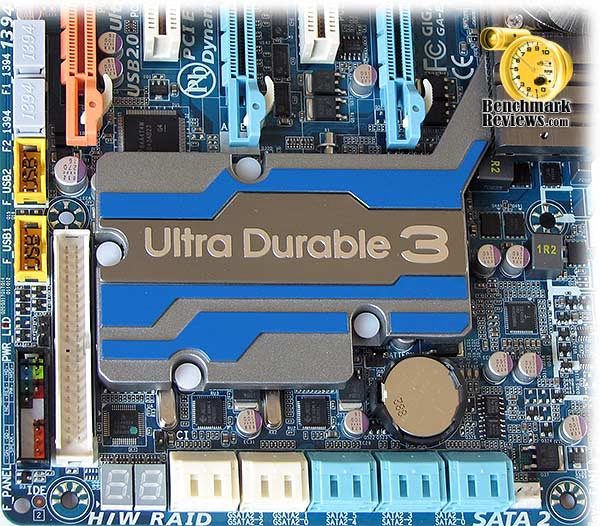
The close-up view illustrated above gives a very good look at the tight-fitting IC components that get surface soldiered to the motherboard via special soldier printers and focused heat guns. In the lower left corner of this image you can see the embedded post code Debug LED, which displays the system status for users wanting to troubleshoot or diagnose their system.
Please continue on towards the next section, which reveals a little about our motherboard testing methodology as it pertains to the Gigabyte GA-EX58-EXTREME Intel Core-i7 X58-Express DDR3 motherboard.
Testing Methodology
Testing motherboards is one of the most difficult tasks I've had as a product analyst. There are several different methods to compare one product to another, but even when you try to measure one against another the features don't always stack up. Benchmark Reviews hasn't been around long enough to have a wide variety of same or past-generation chipset motherboards on hand to test against, which shifts the role of our testing away from who makes the best whatever-chipset motherboard to more of a comparison between this product and another previously-released chipset versions for the same processor and memory. But this is where our problems begin; the X58 chipset is brand new, and there aren't many products we can compare apples-to-apples against a fresh new platform.
The Gigabyte GA-EX58-EXTREME motherboard features two of Intel's latest chipset technologies: the ICH10(R) Southbridge and X58 Express Northbridge. While testing could have easily be left to a simple "this vs. that" routine, we here at Benchmark Reviews think that this is less than educating. For our tests, each motherboard was overclocked as far as safe limits would allow utilizing the exact same supplemental components. Benchmarks are recorded after each test, and a system shut down and restart followed thereafter. Because the QPI opens PCI-Express 2.0 bandwidth to 32GBps, we also spent considerable time testing the "real-world" difference between the motherboards with the exact same video card and drivers.
At the start of all tests, the previous display adapter driver is uninstalled and trace components are removed using Driver Cleaner Pro. We then restart the computer system to establish our display settings and define the monitor. Once the hardware is prepared, we begin our testing. The synthetic benchmark tests in 3DMark06 will utilize shader models 2.0 and 3.0. In our higher-end VGA products we conduct tests at the following resolutions: 1280x1024 (19" Standard LCD), 1680x1050 (22-24" Widescreen LCD), and 1920x1200 (24-28" Widescreen LCD). In some tests we utilized widescreen monitor resolutions, since more users are beginning to feature these products for their own computing.
Each benchmark test program begins after a system restart, and the very first result for every test will be ignored since it often only caches the test. This process proved extremely important in the World in Conflict and Supreme Commander benchmarks, as the first run served to cache maps allowing subsequent tests to perform much better than the first. Each test is completed five times, with the average results displayed in our article.
Our site polls and statistics indicate that the over 90% of our visitors use their PC for playing video games, and practically every one of you are using a screen resolutions mentioned above. Since all of the benchmarks we use for testing represent different game engine technology and graphic rendering processes, I feel that this battery of tests will provide a diverse range of results for you to gauge performance on your own computer system. Since most gamers and enthusiasts are still using Windows XP, it was decided that DirectX 9 would be used for all tests.
Test System #1
-
Motherboard: Gigabyte GA-EX58-EXTREME (Intel X58/ICH10R Chipset) with F4e BIOS
-
Processor: Intel Core i7-920 Nehalem 2.66 GHz (BX80601920)
-
System Memory: 6GB Corsair Dominator PC3-12800 Triple-Channel DDR3 (TR3X6G1600C8D)
-
Disk Drive: Patriot Warp v2 SATA 128GB SSD PE128GS25SSDR
-
Graphics: ZOTAC GeForce GTX 280 AMP! Edition Video Card (Forceware v180.48)
-
Monitor: SOYO 26-Inch Widescreen LCD Monitor DYLM26E6 (1920x1200)
Test System #2
-
Motherboard: Intel DX58SO 'Smackover' Motherboard (Intel X58/ICH10R Chipset)
-
Processor: Intel Core i7-920 Nehalem 2.66 GHz (BX80601920)
-
System Memory: 6GB Corsair Dominator PC3-12800 Triple-Channel DDR3 (TR3X6G1600C8D)
-
Disk Drive: Patriot Warp v2 SATA 128GB SSD PE128GS25SSDR
-
Graphics: ZOTAC GeForce GTX 280 AMP! Edition Video Card (Forceware v180.48)
-
Monitor: SOYO 26-Inch Widescreen LCD Monitor DYLM26E6 (1920x1200)
Test System #3
-
Motherboard #1: Gigabyte GA-X48T-DQ6 (Intel X48/ICH9R Chipset) with F6a BIOS
-
Processor: Intel Q9400 Core 2 Quad 2.66 GHz (BX80580Q9400)
-
System Memory: 4GB Corsair PC3-12800 Dual-Channel DDR3 (TWIN3X40961600C7DHXIN)
-
Disk Drive: Patriot Warp v2 SATA 128GB SSD PE128GS25SSDR
-
Graphics: ZOTAC GeForce GTX 280 AMP! Edition Video Card (Forceware v180.48)
-
Monitor: SOYO 26-Inch Widescreen LCD Monitor DYLM26E6 (1920x1200)
Benchmark Applications
- Futuremark PCMark05 v1.2.0 System Test Suite for Windows XP
- Futuremark PCMark Vantage v1.01 System Test Suite for Windows Vista
- Futuremark 3DMark06 v1.1.0 (8x Anti Aliasing & 16x Anisotropic Filtering)
-
Call of Duty 4: Modern Warfare v1.7.568 (4x AA/16x Trilinear AF)
-
Crysis v1.21 Benchmark (High Settings, 0x and 4x Anti-Aliasing)
-
World in Conflict v1.0.0.9 Performance Test (Very High Setting: 4x AA/4x AF)
-
Operating System: Windows XP Professional SP-3 (optimized to 16 processes at idle)
GA-EX58-EXTREME F4e BIOS
If you're a true hardcore overclocking enthusiast, chances are good that you'll be mighty concerned about the motherboards BIOS. For years now, I have found the BIOS to be the one factor that manufacturers overlook on their products. All of the heatsinks, heat-pipes, and fans will not offer nearly the control over any decent overclock to the same degree as a well designed BIOS. For just as many years, I have also been keeping track of who incorporates the good designs, and who doesn't. This experience has made me become very picky about how I like to have the BIOS presented. I recall a previous review where another now-defunct manufacturer (abit) colored the entire BIOS background pink, and then another manufacturer made theirs completely yellow. Blue works for me, despite its closeness to the BSOD.
So once you get past the enormous retail box Gigabyte packages the GA-EX58-EXTREME in, you'll be ready to subject this "extreme" edition motherboard to some seriously harsh overclocking workloads. The very first thing that I advise any hardware enthusiast or overclocker to do is visit the manufacturers website and download the latest BIOS before you ever begin loading the Operating System. The BIOS we used for our configuration was a version named "ex58ex.F4e" and was flashed via a USB flash drive before we ever complete our first POST. Gigabyte still lists an older version on their website, so you can download the F4e BIOS directly from Benchmark Reviews (unzip before flashing). After successfully uploading the new BIOS firmware, we reset the system and began the fun.
Like any good system builder, the first thing I do is set the date and time. After that, it's straight into the Motherboard Intelligent Tweaker (MIT) section of this Award BIOS. In the image below, which was created with composite sections of the entire MIT page, you can see how far Gigabyte has come with their BIOS programming... and this is just the main MIT page.

Most of the familiar variables are present and accounted for. The CPU Clock Ratio feature allows you to alter the clock ratio for the installed CPU. This item is present only if a CPU with unlocked clock ratio is installed. Intel Turbo Boost Technology can be enable or disabled, to avoid cores from switching 'off' to optimize the cores in use. QPI Link Speed allows you to set the options to: Auto (default), x36, x44, x48, Slow Mode. Even Load-Line Calibration is present, which enables or disables this feature to adjust Vdroop, keeping the CPU voltage more constant under light and heavy CPU load while the Disabled setting keeps CPU voltage at the Intel specifications.
In past motherboard reviews, I've taken pages to document and explain a myriad of BIOS features and functionality. Most people feel that this is an information overload, so for this review I've decided to offer a comprehensive X58 BIOS overclocking guide on PDF. Gigabyte offers this eleven-page guide as a reference for tweaking the Core i7 processor with their X58 motherboards.
3DMark06 Benchmarks
3DMark is a computer benchmark by Futuremark (formerly named Mad Onion) to determine the DirectX 9 performance of 3D game performance with graphics cards. 3DMark06 uses advanced real-time 3D game workloads to measure PC performance using a suite of DirectX 9 3D graphics tests, CPU tests, and 3D feature tests.
3DMark06 tests include all new HDR/SM3.0 graphics tests, SM2.0 graphics tests, AI and physics driven single and multiple cores or processor CPU tests and a collection of comprehensive feature tests to reliably measure next generation gaming performance today. Some enthusiasts may note that Benchmark Reviews does not include CPU-bound tests in our benchmark battery, and that only graphic-bound tests are included.
Here at Benchmark Reviews, we believe that synthetic benchmark tools are just as valuable as video games, but only so long as you're comparing apples to apples. Since the same test is applied in the same controlled method with each test run, I believe 3DMark is a very reliable tool for comparing graphic cards against one-another.
Using the 1920x1200 resolution as a baseline, the maximum settings were applied to 3dMark06 which for these tests include 8x Anti-Aliasing and 16x Anisotropic Filtering. For years now people have revolved around the 3dMark score, which is a composite number that includes CPU and other factors. For this test series, I decided to instead display each test individually, showing the frame rate for each benchmark.

Beginning with Shader Model 2.0 tests, Return to Proxycon is a fast-paced fast-moving scene that puts strain on the GPU by calling for low-graphical demand with high-speed output. In this series the Gigabyte GA-EX58-EXTREME and Intel DX58SO rendered virtually identical 42 FPS frame rates using the Core i7-920. However, the GA-X48T-DQ6 did not fare so well, and could barely muster 27 FPS.
The second SM 2.0 test was Firefly Forest, which demands more graphics processing and produced identical results (again) between the two X58-Express motherboards with 35 FPS each. The older X48 motherboard was kept to only 27 FPS. Using the same video card and driver between two different platforms (X58 and X48) indicates the less-intensive Shader Model 2.0 tests actually create a separation between the series. Let's see if SM 3.0 reacts the same way...

The first test in the Shader Model 3.0 and HDR (High Dynamic Range) series is Canyon Flight. Based on our results, the X58 platforms hover around 42 FPS while the X48 was close behind with 41 FPS. It's strange that there was a much larger disparity between the two platforms in the SM 2.0 tests, but heading into the second test scene, Deep Freeze, it becomes evident. Although the Gigabyte GA-EX58-EXTREME led the way in each test, if only by a fraction over the Intel SmackOver desktop motherboard, the older X48-based platform held tight with only a frame behind the leaders.
In our next section, PCMark Vantage is tested on 64-bit Windows Vista SP-1.
PCMark Vantage Tests
PCMark Vantage is the first objective hardware performance benchmark for PCs running 32 and 64 bit versions of Microsoft Windows Vista. PCMark Vantage is perfectly suited for benchmarking any type of Microsoft Windows Vista PC from multimedia home entertainment systems and laptops to dedicated workstations and hi-end gaming rigs.
Regardless of whether the person benchmarking is an graphic artist or an IT Professional, PCMark Vantage shows the user where their system soars or falls flat, and how to get the most performance possible out of their hardware. PCMark Vantage is easy enough for even the most casual computer user to use, yet supports in-depth, professional industry-grade testing.
Since our hardware configurations used 4GB or more of system memory, we decided that 64-bit Windows Vista would offer a glimpse of real perspective for the 6GB tri-channel DDR3 kit used testing. PCMark Vantage offers several scores for different areas of interest, but because the platform differences between X48 and X58 were so big it was best to keep the bias to a minimum.

Beginning with graphics, the Gigabyte GA-EX58-EXTREME pulled slightly ahead of the Intel DX58SO motherboard even though both utilized the 2.67GHz Core i7-920 CPU on their X58-Express platform. The Gigabyte GA-X48T-DQ6 did well, but still came in roughly 14% below the QPI-equipped motherboards. It may not be much, but this could be the proof we're looking for to show that gaming can benefit by the Core i7/X58 platform.

The PCMark Vantage 'HDD' score is a little misleading; primarily because we didn't use a hard drive for testing. Instead the Patriot Warp v2 SSD was used, which tests the SATA chipset for bottlenecks with solid state drive products. For all intents the playing field was quite even. The older GA-X48T-DQ6 offered the best score, if even by only a few small percent, but it also had to do so with the secondary JMicron JMB323 SATA controller. Intel's own ICH10(R) Southbridge was right behind, followed by the JMicron JMB322 SATA controller for the Gigabyte GA-EX58-EXTREME.

The last area of interest for PCMark Vantage was the 'memories' score, which I must admit is an unfair comparison of two very dissimilar platforms. Needless to say, the QPI technology gives triple-channel DDR3 a much greater bandwidth (and 8.5 GBps advantage) over dual-channel DDR3. The Gigabyte GA-EX58-EXTREME eeked out a score only a few points higher than Intel's SmackOver motherboard, but both dominated over the X48 platform.
In the next section, we test gaming performance between the platforms with Crysis.
Crysis Benchmark Results
Crysisuses a new graphics engine: the CryENGINE2, which is the successor to Far Cry's CryENGINE. CryENGINE2 is among the first engines to use the Direct3D 10 (DirectX10) framework of Windows Vista, but can also run using DirectX9, both on Vista and Windows XP.
Roy Taylor, Vice President of Content Relations at NVIDIA, has spoken on the subject of the engine's complexity, stating that Crysis has over a million lines of code, 1GB of texture data, and 85,000 shaders. To get the most out of modern multicore processor architectures, CPU intensive subsystems of CryENGINE 2 such as physics, networking and sound, have been re-written to support multi-threading.
Crysis offers an in-game benchmark tool, which is similar to World in Conflict. This short test does place some high amounts of stress on a graphics card, since there are so many landscape features rendered. For benchmarking purposes, Crysis can mean trouble as it places a high demand on both GPU and CPU resources. Benchmark Reviews uses the Crysis Benchmark Tool by Mad Boris to test frame rates in batches, which allows the results of many tests to be averaged.
Low-resolution testing allows the graphics processor to plateau its maximum output performance, which thereby shifts demand onto the other system components. At the lower resolutions Crysis will reflect the GPU's top-end speed in the composite score, indicating full-throttle performance with little load. This makes for a less GPU-dependant test environment, and is helpful in creating a baseline for measuring maximum output performance in the next few test results. At the 1280x1024 resolution used by some newer 17" and most 19" monitors, all of the video cards tested performed at very respectable levels.

At 1920x1200 resolution Crysis is rendered by the GTX 280 at around 46 FPS by both the Gigabyte GA-EX58-EXTREME and Intel DX58SO, while the GA-X48T-DQ6 comes in well behind with only about 34 FPS. The primary reason behind this is bandwidth bottlenecks, which are solved with the Core i7 QPI technology. This phenomenon should subside as demands are increased, and (top speed) bandwidth requirements are reduced. Let's see if adding 4x AA makes a difference...
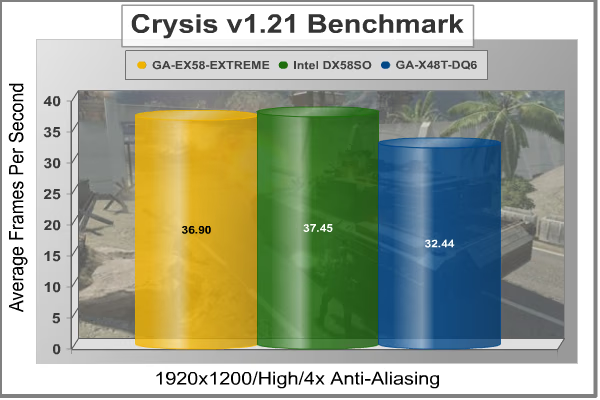
A trend is beginning to surface here, and the message is clear: Core i7 offers something for everyone... gamers included. While the difference isn't so big that you're going to drop your X48 or older platform for the slight improvements of the X58, but these test show that performance does come into consideration for high-demand games. The much-improved memory path no longer has to travel out from the processor to the Northbridge and back, which make a noticeable difference in performance.
In our next section, Benchmark Reviews will test the X58 platforms against last generations X48 in the fast-paced Devil May Cry 4.
Devil May Cry 4 Benchmark
Devil May Cry 4 was released on PC in early 2007 as the fourth installment to the Devil May Cry video game series. DMC4 is a direct port from the PC platform to console versions, which operate at the native 720P game resolution with no other platform restrictions. Devil May Cry 4 uses the refined MT Framework game engine, which has been used for many popular Capcom game titles over the past several years.
MT Framework is an exclusive seventh generation game engine built to be used with games developed for the PlayStation 3 and Xbox 360, and PC ports. MT stands for "Multi-Thread", "Meta Tools" and "Multi-Target". Originally meant to be an outside engine, but none matched their specific requirements in performance and flexibility. Games using the MT Framework are originally developed on the PC and then ported to the other two console platforms.
On the PC version a special bonus called Turbo Mode is featured, giving the game a slightly faster speed, and a new difficulty called Legendary Dark Knight Mode is implemented. The PC version also has both DirectX 9 and DirectX 10 mode for Microsoft Windows XP and Vista Operating Systems.
It's always nice to be able to compare the results we receive here at Benchmark Reviews with the results you test for on your own computer system. Usually this isn't possible, since settings and configurations make it nearly difficult to match one system to the next; plus you have to own the game or benchmark tool we used.
Devil May Cry 4 fixes this, and offers a free benchmark tool available for download. Because the DMC4 MT Framework game engine is rather low-demand for today's cutting edge multi-GPU video cards, Benchmark Reviews uses the 1920x1200 resolution to test with 8x AA (highest AA setting available to Radeon HD video cards) and 16x AF. The benchmark runs through four test scenes, but scene #2 and #4 are the ones that usually offer a challenge. Displayed below is our results for the test.

As you can see from our results, scene two average between 97-98 FPS for all platforms involved. This is rather disappointing, but at the same time I expect such high frame rate results from a low graphical demand video game.
Scene four, which averaged around 101 FPS for the X58 platforms, sank down to 88 FPS on the X48 paltform using the GTX 280 same video card and driver. DMC4 was intended to replace our UT3 test, which commonly offered results as high as 180 FPS, but the search for high-demand graphics tests is getting tough. Feel free to write us with your suggestions.
World in Conflict Tests
The latest version of Massive's proprietary Masstech engine utilizes DX10 technology and features advanced lighting and physics effects, and allows for a full 360 degree range of camera control. Massive's MassTech engine scales down to accommodate a wide range of PC specifications, if you've played a modern PC game within the last two years, you'll be able to play World in Conflict.
World in Conflict's FPS-like control scheme and 360-degree camera make its action-strategy game play accessible to strategy fans and fans of other genres... if you love strategy, you'll love World in Conflict. If you've never played strategy, World in Conflict is the strategy game to try.
Based on the test results charted below it's clear that WiC doesn't place a limit on the maximum frame rate (to prevent a waste of power) which is good for full-spectrum benchmarks like ours, but bad for electricity bills. The average frame rate is shown for each resolution in the chart below. World in Conflict just begins to place demands on the graphics processor at the 1920x1280 resolution, so we'll jump ahead for our consensus.
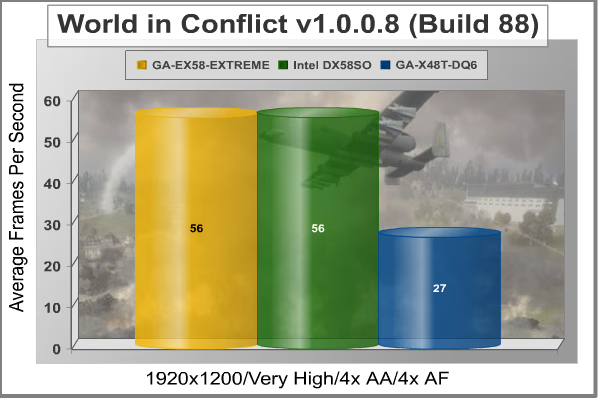
Judging from the landslide performance charted above, some games do better than others at showing the benefit of Intel's new X58 platform when paired to the Core i7 processor. Quad-cores abound, the memory architecture makes all the difference. QPI obviously offers the near-instant turn-around from commands that newer graphics hardware and games can benefit from.
While the Gigabyte GA-EX58-EXTREME performed identically to the Intel DX58SO with 56 FPS on average, the GA-X48T-DQ6 suffered a lowly 27 FPS average. Memory intensive applications have proven their point: the Core i7 platform wins. In our next section, I give my final thoughts on Intel's X58 platform and the new Core i7 processor series.
Intel X58 Final Thoughts
While I didn't write the Intel Core i7 CPU & DX58SO X58 Platform article featured here at Benchmark Reviews, I've come to agree with Miles Cheatham on all points covered in his comprehensive review. The X58 'Tylersburg' platform is Intel's first offering for the Core i7 'Nehalem' processor, with several more already in the works. No sooner can I cheer the Core i7/X58 marriage before Intel already has a quad-core 'Lynnfield' and dual-core 'Havendale' processor poised for release on the LGA1160 socket sometime after the New Year. Later into 2009 Intel will offer the P55 'Ibexpeak' platform, which changes the game once again and ditches the term 'chipset' in place of Platform Controller Hub (PCH).
With DRAM being sold at the lowest prices we've seen in many years, the introduction of a motherboard willing to harness 24GB of DDR3 may be a blessing in disguise. Even though enthusiasts have yet to fall in love with Windows Vista, the 64-bit version of Windows Vista (and to a lesser extent Windows XP 64) have seen renewed interest since the launch of Intel's X58 platform. The market has already begun to sell 6GB tri-channel kits, and it will be a short matter of time before we have 12GB kits pieced together from 4GB modules. Despite my protest, we'll even begin using Vista 64 Ultimate for testing tri-channel system memory kits.
There is still one minor drawback for the X58 platform which effects enthusiasts: the difference in CPU cooler mounting dimensions. Many overclockers and enthusiasts have grown to cherish their favorite cooler, and trust them to cool the hottest setup. The problem now is that many manufacturers are offering free adapter kits, or include an adapter with their current model coolers, which leads to bigger problems.
CPU coolers made for the LGA775 platform were designed for use with a Core 2 (Duo or Quad) or Pentium 4 and D processor with an integrated heat-spreader measuring 28.5 x 28.5mm (812.25mm total), but the LGA1366 socket requires a much larger 32 x 35mm (1120mm total) footprint to accommodate the extra 591 'pins'. If you use an LGA775 cooler on a LGA1366 socket, your missing out on 38% (307.75mm) of the contact surface.
Regardless of whether the X58 is the last 'chipset' motherboard we see from Intel, or a stepping stone for future PCH-based designs, the future of computing has paved the way for Moore's law to continue as predicted. Herein lies the problem though, because software hasn't been keeping up with its end of the deal, and most of us still use the 32-bit technology introduced back in Windows 95; it's sad but true. Games like Crysis helped give reason for advancing graphics technology, just like virtualization technology and Terminal Services helped push processor power.
But heading into 2009 we now have Crysis: Warhead, a game which require less graphics power than the former version, and newer server and virtualization technology that uses fewer CPU cycles. Essentially the wheels are slowly turning in opposite directions; although more accurately put, the software 'wheel' is barely turning at all while hardware is laying rubber). Which raises the question: to what end?
I used to overclock my Pentium 4 (and later Pentium D and Core 2) processor to get a few extra frames out of Battlefield 2 and earn more work units per day with Folding @ Home. But now I have a graphics card that performs 600x better at folding proteins than my CPU ever did, and a processor that can encode my authored DVD's in a fraction of the time. We haven't hit the wall, but the light at the end of the tunnel is a long ways off. If software doesn't come around soon, we'll soon share automobile dilemma: faster engines with more horsepower, so we can drive 65 MPH. I personally feel that this has been the case since Core 2 was launched, which is why we're already sharing another auto-industry dilemma: efficiency.
EX58-EXTREME Conclusion
Whenever a new hardware platform launches, I feel that manufacturers owe it to consumers to educate them on the changes. To this extent, Gigabyte does only offers a few tiny bullet points of information pertaining to QPI, and 3-channel memory. What you get is a whole lot of information on Ultra Durable 3 and the benefits of using 2 ounces of copper, some marketing points pertaining to Hybrid Silent-Pipe 2, and a little about Dynamic Energy-Saver. This is all fine if you're a lifelong Gigabyte motherboard user, but buyers compare apples to oranges, and Gigabyte needs to remember this.
The overall appearance is very impressive. My first impression was that the GA-EX58-EXTREME left behind all of the colorful pastels as a reminder that it came to do business. Gigabyte has a winning combination of shiny silver and anodized blue components. The colors used for expansion card slots are matched to bus speed and type, and the power phase and onboard LEDs give just as much for user feedback as they do for captivating looks. At the end of my testing I was pleased to say I don't miss copper heatpipe tubing winding around the motherboard, because the EX58-EXTREME traded in this look for polished nickel.
For the first time in several product releases, I have found a motherboard with a near-perfect component layout. The construction is what you would expect from a top-class premium product: second to none. I know that there has been a long history of being second-best in the motherboard industry, but the GA-EX58-EXTREME has done a convincing job of saying otherwise. All ten SATA ports are turned sideways, which allows full access to them even with large video cards installed. Even the six memory module banks are located away from the action for better access and cooling.
Considering the performance was equal or slightly better than Intel's own X58 Smackover motherboard, I believe it's a safe bet to claim that Gigabyte has given the GA-EX58-EXTREME more functionality than any other motherboard they've previously designed. I won't rehash two pages of Gigabyte-specific features, you can always revisit those sections, but instead I will add that both graphics and application performance were noticeably improved with the X58 platform.
At the time of this writing, NewEgg offers the Gigabyte GA-EX58-EXTREME for $328.99. I recognize that this is Gigabyte's flagship X58 motherboard for overclockers, but it seems like the days of old when Gigabyte motherboards offered the same great features without he premium price tag have sadly come to pass. NewEgg also has the ASUS P6T Deluxe we recently reviewed currently selling for $338.99, which means that price-shoppers will want to use our Price Comparison Tool for the best online deals.
In conclusion, I recommend the Gigabyte GA-EX58-EXTREME X58-Express DDR3 motherboard to enthusiasts wanting the absolute best possible performance and functionality out of their Intel Core i7 system. Overclockers are guaranteed to enjoy the myriad array of settings and BIOS configuration options, while the performance enthusiast will admire the scalability of 3-way SLI and CrossFireX. 24GB of total DDR3 capacity will please 64-bit users, and ten total SATA ports will ensure that no drive is left behind (a popular initiative for my SSD collection). The full depth of Gigabyte's proprietary product features is well worth the asking price, and there isn't another motherboard available that can offer much challenge to the EX58-EXTREME. Considering the matched performance against Intel's DX58SO, the final choice will depend on your needs.
Pros:
+ Outstanding BIOS - designed for overclockers!
+ Hyrbid Silent-Pipe 2 component improves X58 thermal cooling
+ Advanced Dynamic Energy Saver Advanced offers VRD 11.1 ultra-low power state
+ Triple PCI-Express 2.0 compliant graphics slots
+ BIOS updates are made safe with dual-BIOS
+ Japanese-manufactured surface mount all-solid capacitors
+ Blu-Ray/HD DVD Full rate audio with DTS connect
+ Supports three-way ATI CrossFireX and NVIDIA SLI video card sets
+ Industry-leading thermal cooling architecture
+ 2oz Copper Ultra Durable 3 construction improves cooling and stability
+ Best in class graphics and application performance
+ Dual Gigabit LAN network teaming
+ Supports 24GB of Dual- or Triple-channel DDR3
+ 6 Intel ICH10R and 4 JMB322 SATA ports
+ Kit includes CrossFireX bridge component
Cons:
- Expensive motherboard solution
- Complicated BIOS is not for novice overclockers
- Kit does not include SLI bridge component
- Lacks Serial Attached SCSI (SAS) onboard support
- Independent core multipliers are not available
- Turbo Boost not available when overclocking
Ratings:
-
Presentation: 8.75
-
Appearance: 9.50
-
Construction: 9.75
-
Functionality: 9.50
-
Value: 7.75
Final Score: 9.25 out of 10.
Excellence Achievement: Benchmark Reviews Golden Tachometer Award.
Questions? Comments? Benchmark Reviews really wants your feedback. We invite you to leave your remarks in our Discussion Forum.
Reader comments from the original article
6 comments were posted before commenting closed. They are preserved as written. Original avatars no longer resolve and are shown as a placeholder.
RE: Gigabyte GA-EX58-EXTREME Core i7 Motherboard faroos Permalink:
Thanks Very usefull information
Is the watercooling optional? Joseph Permalink:
Hi! I really enjoy your articles. Concerning the hybrid silent pipe ,once you have installed it. Can you just run the motherboard on air cooling or is watercooling mandatory?
Either or both Olin Coles Permalink:
The motherboard's Northbridge is air cooled by default, and you can ADD water cooling into the mix at any time to enhance thermal performance. The waterblock acts as a heatsink, with or without water in it.
Without the hybrid silent pipe? Alphonsus Permalink:
I need to install the grass valley HDSpark video editing card & it gets in the way of the pci-e slot unless I dismantle the hybrid silent pipe. Will this damage the motherboard without the hybrid silent pipe?
RE: Without the hybrid silent pipe? Olin Coles Permalink:
The Hybrid Silent Pipe is an optional component, and it won't harm the motherboard is you choose not to use it.
RE: Gigabyte GA-EX58-EXTREME Core i7 Motherboard Suvasis Permalink:
What is water cooling, if clarify will be great.